
Custom Development
Alcohol Delivery Market Share and Trends: Size, Growth, & Business Opportunities
7 Apr 2026
The healthcare sector was the only business that did not bear the brunt of the Covid-19 pandemic. Though this sector survived the implications, it went through a revamp. The traditional ways of treating people and diagnosing diseases are no more in operation. And those healthcare organizations that still use them are on the brink of fading into oblivion.
The thing that helped medical practitioners manage the massive influx of patients was healthcare apps. Healthcare apps also assist in handling administrative tasks well.
Apart from this, today's healthcare apps are also not up to the mark. IMS Institute states that out of 43,000 fitness and healthcare apps in Apple's iTunes app store, merely 16,000 are patient-facing apps containing genuine health content. This observation reiterates that developers, people, and healthcare professionals are not aware of the benefits of healthcare apps.
Thus, to make them know the benefits of healthcare apps for them to create efficient healthcare apps, this blog discusses the general and work-specific benefits of healthcare apps.
Here we discuss how healthcare apps help everyone in general.
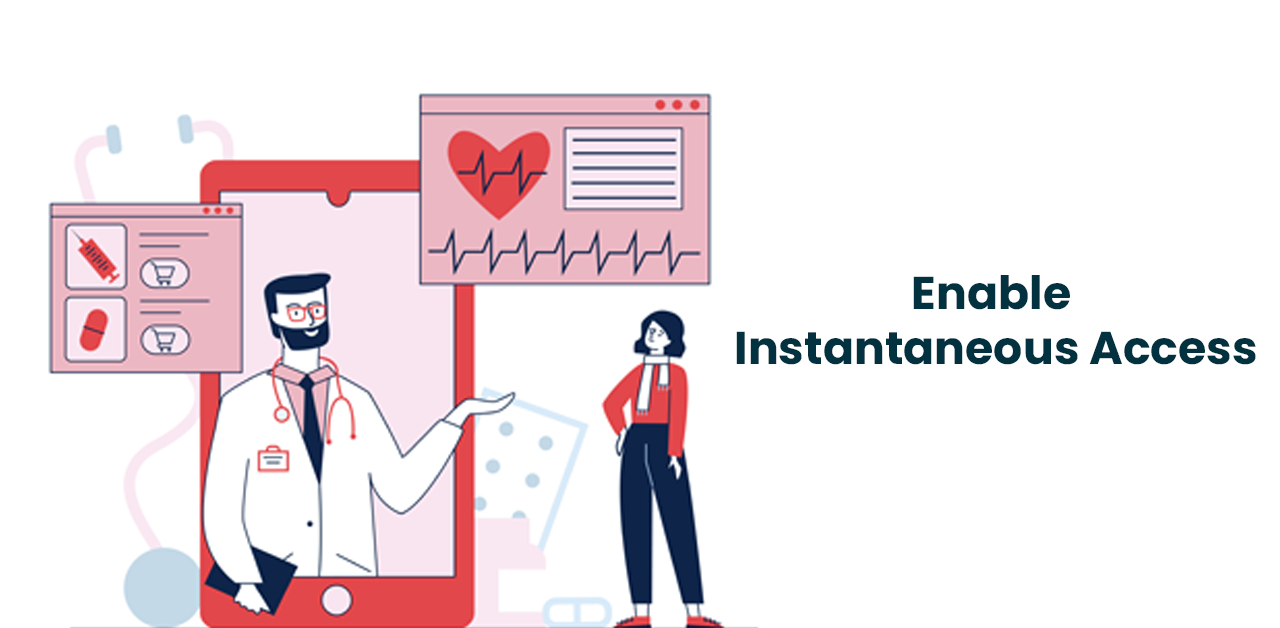
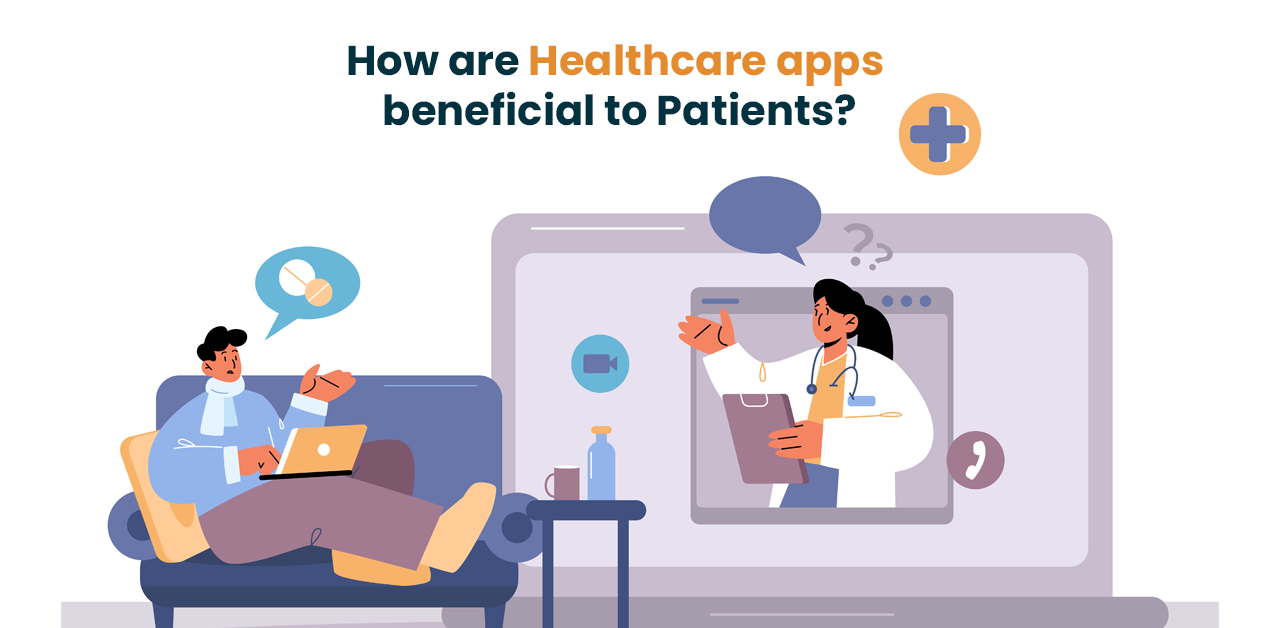
Healthcare apps provide instant access to patients and doctors. Using a healthcare app means the patient is no longer bound to commute and be physically present in the hospital. All a patient needs to do is download healthcare apps and get in touch with professionals anywhere and anytime.
Besides this, doctors also save time by monitoring patients via healthcare apps instead of visiting patients at their places.
A custom-made healthcare app helps doctors to prepare for an emergency in advance. The healthcare app will notify doctors of the incident and send the necessary information if an emergency arises.
This information will help them prepare the treatment plan while the patient is going to the hospital.
Customized Healthcare apps also assist doctors and staff in coordinating with their patients. In addition to it, healthcare apps help manage work, information flow, and communication on the hospital premise.
Healthcare apps also make it easy for patients to collect their prognoses without even visiting the hospital and start taking their medications. Apart from this, healthcare apps are a great tool to remind patients and doctors of their scheduled appointments.
Healthcare apps have made remote monitoring a reality. For this, healthcare apps work in tandem with wearables. These wearables measure a person's pulse rate, blood pressure, etc.
The database stores this data for use in the Future. This data also helps in remote monitoring.
This benefit of healthcare apps is not patient-centric. It revolves around healthcare app developers and entrepreneurs. Not many entrepreneurs use automation and emerging technologies in their healthcare apps.
This way of app development creates room for improvement. New start-ups focus on those features that others have missed out on, thus earning people's trust and profits.
Healthcare apps improve a hospital's patient engagement. People tend to use a hospital's facilities only when they offer to securely store their data like medical records/prescription details.
Such a feature ensures that patients can access their data and receive their prescriptions without going to the hospital.
Everyone knows that manually storing a patient's data is time-consuming and prone to inaccuracies. Inaccurate data can be fatal to a patient's health. Still, healthcare apps keep such a situation at bay by digitally storing patient data. This stored data helps doctors prescribe the proper medication with the correct dosage.
On top of it, if a patient decides to change their doctor, they can freely do it as this stored data can be transferred easily.
Healthcare apps have made standing in long queues to make payments a thing of the past. This feature is a relief for both doctors and patients. Now, they do not need to carry cash while visiting hospitals. Highly secured payment gateway integration in healthcare apps prompts people to make payments instantly.
Healthcare apps have an inbuilt reminder that helps patients remember when to take their medicines, their following appointments, and prescription renewals. In this way, patients have more control over their therapy and treatment than before.
This feature of healthcare apps reduces repetitive administrative work by making reminders automatic.
A hospital daily gets tons of data to store. This task is tedious when done manually. Integration of EHR into healthcare apps makes keeping data easy. This arrangement automatically stores valuable patient data from connected devices or wearables and produces a comprehensive profile of each patient.
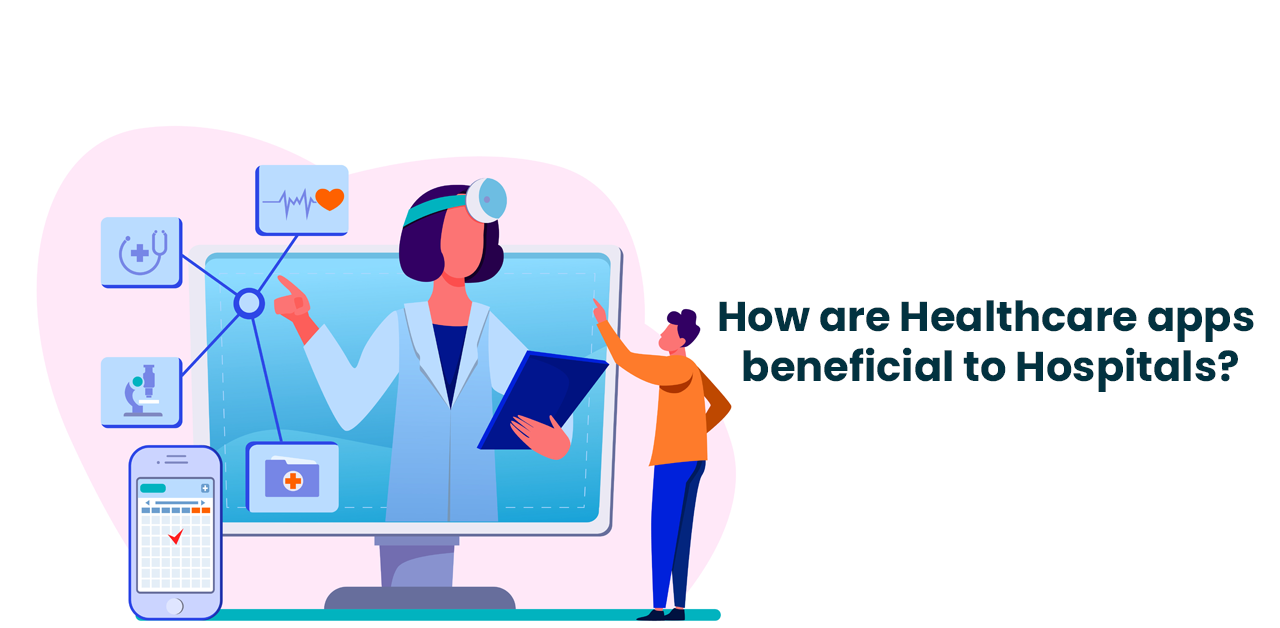
So far, we have read about the general benefits of healthcare apps. Now we will read how healthcare apps help hospitals, patients, pathology labs, and chemists.
AppsRhino offers the best Tech-driven solutions for Home services, Laundry delivery, Alcohol delivery, Grocery Delivery, Food Delivery, and Taxi Services:
Developers need to create healthcare apps according to the latest trends and technologies. Moreover, healthcare institutes need to examine their rivals' healthcare apps and see what they have and what they lack. Doing so will ensure that your healthcare apps have everything that a person wants in addition to what they need but have not gotten yet.
This task requires extensive care and focus. And only a professional can execute it like an expert. You can find such professionals in the developers of AppsRhino, so contact us today to get started!
Custom Development
7 Apr 2026
Tell us what your business actually runs on today, and we will map what it takes to make it one system.