

Custom Development
Alcohol Delivery Market Share and Trends: Size, Growth, & Business Opportunities
7 Apr 2026
Healthcare is evolving fast—and pharmacy automation is leading the charge.
This guide breaks down the what, why, and how of pharmacy automation—covering the tech behind it, real-world use cases, and its impact on efficiency and patient care.
Whether you’re a Hospital IT Manager, Clinic Owner, Telemedicine Founder, or HealthTech Product Manager, this guide is for you.
It shows how pharmacy automation can help you manage high patient volumes, limited resources, and medication errors—so you can make smarter, faster, and safer decisions.
We’ll walk you through:
If you’re curious about how automation is changing healthcare operations around th world, then let’s dive in to see the full picture.
Pharmacy automation refers to the use of technology—both hardware and software—to handle routine, repetitive tasks in a pharmacy setting.
It replaces or assists manual operations like sorting pills, labeling prescriptions, and managing medication inventory with machines and smart systems.
The goal is simple: reduce errors, save time, and increase efficiency without compromising patient care.
Modern pharmacy automation systems are built to manage high-volume and time-sensitive tasks such as:
This is especially valuable in hospitals and clinics where pharmacy teams deal with hundreds—if not thousands—of prescriptions daily.
In a manual setup, pharmacy staff are responsible for measuring, counting, labeling, and checking every medication by hand. While this works for small volumes, it increases the risk of human error, especially under pressure.
In contrast, automation in the pharmacy reduces the physical load on staff by using robotic arms, conveyor systems, and smart cabinets. These machines follow set protocols, ensuring consistency and reducing mistakes, no matter how busy things get.
Types of Technology Used
In 2018, University Hospitals Coventry and Warwickshire NHS Trust implemented automated dispensing cabinets (ADCs) across 72 wards, clinics, and theatres.
This initiative provided 24/7 stock visibility throughout the organization and enhanced compliance with storage requirements. A significant advantage was the ADCs' ability to autonomously reorder medications, eliminating the need for manual inventory checks.
The integration of these systems with the hospital's Electronic Patient Record (EPR) system led to a 20% reduction in medication errors and improved workflow efficiency across multiple sites. (Source: Omnicell.co.uk)
From high-tech hospital setups to simple systems in rural clinics, pharmacy automation is adaptable. It’s not about replacing people—it’s about giving healthcare teams tools to do more with less.
Automation in the pharmacy is not just about machines filling prescriptions.
It’s a coordinated system of hardware and software that transforms how pharmacies manage medications, from entry to delivery. Here's how the process unfolds in a real-world pharmacy setting.
Prescription Entry: It all begins when a doctor enters a prescription into the Electronic Health Record (EHR) or e-prescribing system.
Order Verification: A pharmacist reviews the digital order for accuracy and checks for potential drug interactions or allergies using clinical decision support tools.
Automated Dispensing: Once verified, the prescription goes to an automated dispensing system—this could be a robot or a smart cabinet—that selects the correct medication, counts the pills, and places them into a labeled container.
Packaging and Labeling: Machines label the medication according to the patient’s profile. In some setups, barcode verification is used to ensure accuracy at every step.
Final Check: A pharmacist or technician performs a final check before the medication is dispensed to the patient or nursing station.
Delivery or Pickup: The medicine is then delivered to wards (in hospitals), handed over at retail counters, or shipped in case of mail-order services.
While automation handles repetitive and time-consuming tasks, human input remains vital for
In a typical hospital pharmacy using automation, early mornings begin with auto-dispensed medications ready for the wards.
The team spends less time counting and more time on medication therapy reviews, reducing burnout and improving patient engagement
Pharmacy automation doesn’t remove the human touch—it enhances it by making pharmacy workflows faster, safer, and smarter.
Pharmacy automation is revolutionizing the way medications are managed and dispensed.
Whether in hospitals, clinics, or telehealth setups, automation in the pharmacy brings real, measurable benefits that go beyond operational speed—it enhances care delivery, reduces stress on pharmacy teams, and directly improves patient outcomes.
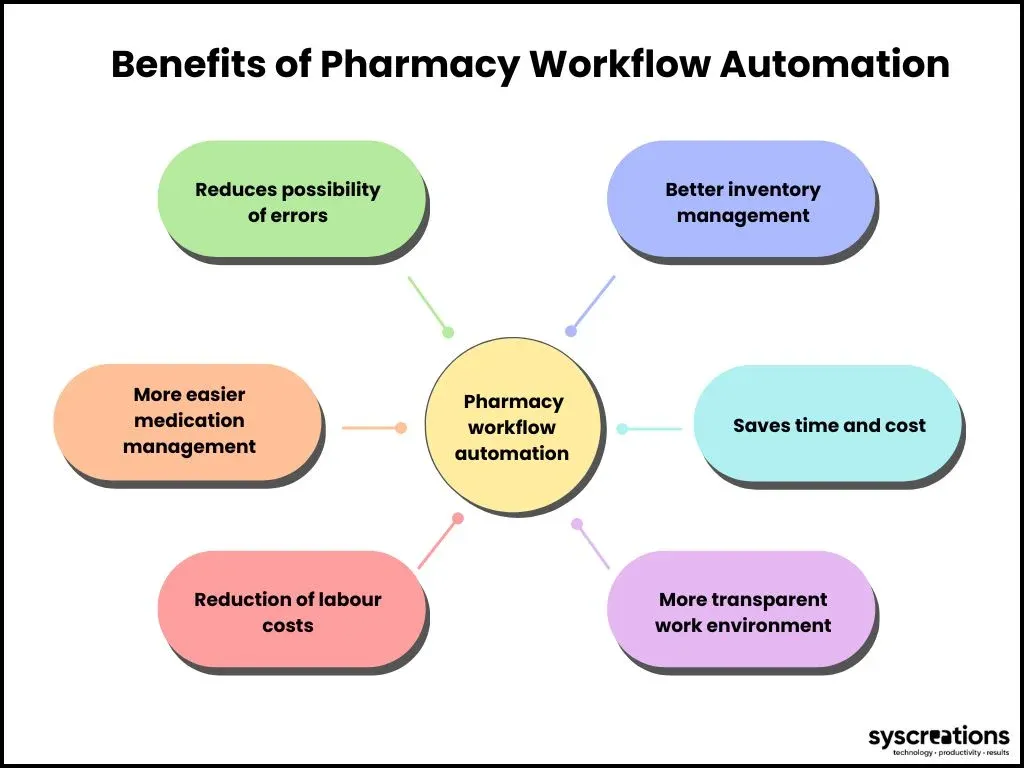
Automation frees up pharmacy staff from repetitive, low-value tasks like counting pills or printing labels.
That time is redirected toward more meaningful responsibilities—patient counseling, reviewing complex drug interactions, or working alongside care teams on medication therapy management.
In hospitals, this leads to more face-to-face time with patients, which can directly impact recovery outcomes.
Manual dispensing is prone to human errors, especially during peak hours or when managing high volumes.
Pharmacy automation systems use barcode scanning, robotic accuracy, and digital verification to eliminate common mistakes like wrong dosages or incorrect labeling.
According to studies, error rates drop significantly—some hospital systems report up to a 20-30% reduction in medication-related errors after automation.
During flu seasons, pandemic surges, or routine rush hours, pharmacies often get overwhelmed. Automation systems don’t fatigue, and they scale well under pressure.
They can fill hundreds of prescriptions in less time than a full manual team—without compromising on accuracy. This benefit is especially vital for mail-order pharmacies and large hospital chains.
Automated systems track every unit dispensed and alert pharmacy managers when stock runs low or medications approach expiry.
This level of control improves procurement planning, reduces wastage, and ensures critical drugs are always available.
For clinics and small practices, it means no more overstocking or last-minute scrambles.
In a hospital emergency room or intensive care unit, time is everything.
Automated cabinets allow nurses and physicians to quickly retrieve life-saving medications with digital authorization, reducing wait times and eliminating paper trails.
Texas Children’s Hospital, one of the most extensive pediatric care facilities in the United States, implemented Omnicell’s pharmacy automation solutions to enhance medication management for its mother-baby and pediatric patient populations.
By adopting advanced technologies, the hospital achieved approximately 95% real-time visibility into its inventory, leading to a 16% reduction in medication management costs and significant annual savings. HealthTech Magazines
While pharmacy automation delivers clear benefits, it’s not without hurdles.
Every healthcare setting—whether a hospital, local pharmacy, or telemedicine platform—must weigh these challenges before diving in. Understanding the roadblocks helps in planning better and setting realistic expectations.
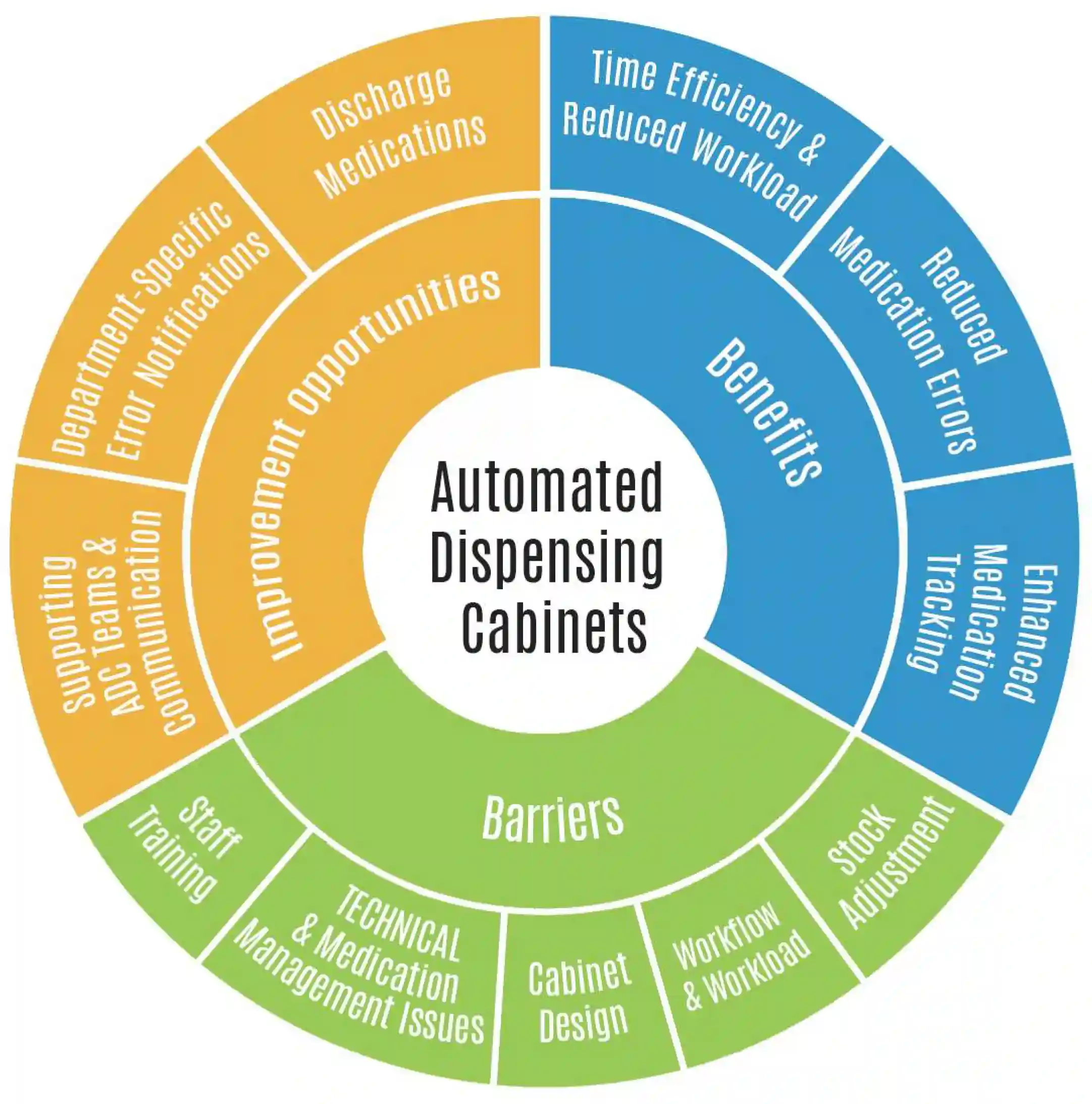
One of the most significant barriers to adoption is the initial cost. Robotic dispensers, smart cabinets, and integrated software systems don’t come cheap.
Even small-scale automation tools require capital investment and infrastructure adjustments. However, many institutions see a strong ROI over time through reduced labor costs, fewer errors, and better inventory control.
Pro Tip: Look for phased solutions—start with smaller automation tools like label printers or barcode scanners before scaling up to robotic systems.
Introducing new technology can be disruptive. Pharmacists and technicians may be skeptical of automation, fearing job loss or workflow changes.
Training takes time, and early phases often face pushback.
Solution: Involve staff early in the decision-making process. Training programs and pilot projects help ease the transition and demonstrate value quickly.
No tech is perfect. If an automated dispensing system crashes or a barcode scanner malfunctions, it can halt operations.
Without backup protocols or manual alternatives in place, even short downtimes can delay patient care.
Best Practice: Always maintain manual fallback systems and keep vendor support on-call for rapid troubleshooting.
Pharmacy automation is excellent for routine, repetitive tasks—but not for everything.
Compounding personalized medications, making clinical decisions, or addressing nuanced patient concerns requires human expertise.
Also, rural clinics or low-volume pharmacies might not benefit from large-scale automation due to their smaller prescription load.
Smaller setups often struggle with cost and space limitations. They may not have the resources for high-end robotics, but that doesn’t mean they’re left out.
Compact devices, software-only tools, and hybrid systems offer a practical path forward.
Tip: Start with what matters most—automate the most error-prone or time-consuming task first.
Understanding the impact of pharmacy automation becomes clearer when we see it in action.
Across various healthcare settings—big hospitals, small clinics, retail chains, and even rural pharmacies—automation is reshaping how medications are dispensed and managed.
Mount Sinai Health System in New York implemented the Robot-Rx Medication System, a state-of-the-art robotic dispensing system capable of handling up to 10,000 doses daily.
This automation has allowed pharmacy staff to allocate more time to clinical functions alongside doctors and nurses, enhancing patient care and operational efficiency. (Mount Sinai Health System)
Holzer Health System, serving rural communities in Ohio and West Virginia, integrated automated dispensing cabinets (ADCs) to streamline their pharmacy operations.
This implementation improved medication safety, reduced dispensing errors, and improved inventory management, even with limited staff resources.
CVS Health has embraced automation across its network of over 9,000 stores by utilizing robotics, machine learning, and artificial intelligence.
This technology enables remote prescription filling, reducing the administrative burden on pharmacists and allowing them to focus more on patient care services such as vaccinations and health screenings. (Drug Store News)
In addition to serving as a local clinic, Holzer Health System's adoption of ADCs has been particularly beneficial in its rural settings.
The automation has ensured consistent medication availability and safety, addressing challenges commonly faced by rural pharmacies, such as staffing shortages and limited access to advanced healthcare technologies. (ResearchGate)
From a patient’s perspective, automation in the pharmacy often translates to:
These enhancements contribute to a more efficient and trustworthy pharmacy experience, which leads to greater patient satisfaction and adherence to medication regimens.
The future of pharmacy automation goes far beyond robotic pill counters and barcode scanners.
As healthcare moves toward smarter, connected, and predictive systems, pharmacy tech is evolving in ways that redefine both operations and patient experiences. Here’s what’s next.
Artificial Intelligence (AI) is being integrated into pharmacy workflows to support predictive analytics and real-time decision-making.
These systems can forecast drug demand, flag potentially dangerous drug interactions, and even suggest dosage adjustments based on patient data.
For example, health systems are starting to deploy AI tools that analyze trends from EHRs (Electronic Health Records) to preemptively stock high-demand medications—reducing waste and shortages.
Cloud technology allows for centralized data access, remote prescription filling, and real-time updates across pharmacy locations.
This model benefits multi-site hospital systems and retail chains, offering streamlined operations and enhanced collaboration among pharmacists, physicians, and care teams.
Systems like Omnicell’s Cloud Pharmacy Platform allow institutions to manage drug inventory, compliance, and analytics from any location (source).
Future automation tools will integrate more deeply with Electronic Health Records (EHRs) and telehealth platforms.
This allows pharmacists to access a patient’s full medical history, allergies, and lab reports in real time—leading to safer and more personalized medication management.
The goal? A connected care ecosystem where the pharmacy becomes a strategic node, not just a fulfillment center.
Self-service pharmacy kiosks are gaining momentum, especially in retail and outpatient clinics.
These stations allow patients to pick up refills, scan QR codes, and consult remotely with pharmacists—all without stepping into a traditional pharmacy counter.
These tools help reduce wait times, extend hours of access, and support medication adherence—especially in underserved or remote areas.
As automation handles more backend tasks, pharmacists will move into more clinical and consultative roles. Expect to see more pharmacists working in chronic care management, medication therapy, and collaborative care teams.
They will be less focused on physical dispensing and more on improving treatment outcomes and managing long-term care.
Pharmacy automation is on a clear trajectory: smarter systems, deeper integrations, and more human-centric workflows. The future isn’t just about machines—it’s about enabling pharmacists to practice at the top of their license.
Adopting pharmacy automation doesn’t require a massive overhaul or a million-dollar budget. Whether you’re running a hospital pharmacy, a local clinic, or a retail chain, the key is to start small, scale wisely, and focus on areas with the highest return on efficiency and safety.
Begin by identifying your most time-consuming or error-prone pharmacy tasks. Are prescription labeling mistakes common? Is inventory a mess? Are pharmacists spending too much time counting pills?
Your first automation step should address your most critical workflow challenge.
Look for low-cost, high-impact tools. For example
These tools require minimal disruption and deliver fast improvements in safety and efficiency.
When evaluating technology providers, don’t just look at the product—ask about:
Involve pharmacists and technicians from the start. Early input increases buy-in and reduces resistance. Schedule hands-on training, share success stories from other pharmacies, and create a pilot phase to experiment safely.
Remember: The tech works best when the team understands its value and use.
Start with one or two automation tools, evaluate performance, and build from there. Once basic systems are in place, you can move to advanced solutions like robotic dispensers, smart cabinets, or AI-enabled analytics.
For example, a clinic might first automate labeling and inventory, then expand to auto-dispensing units as patient load grows.
Starting your automation in the pharmacy journey doesn’t have to be complex. With the right plan, the right partner, and a committed team, even small steps can lead to big operational gains.
Pharmacy automation is no longer a luxury—it’s a strategic move for pharmacies and healthcare providers aiming to improve safety, streamline operations, and deliver better patient outcomes.
From reducing medication errors and easing staff workloads to optimizing inventory and preparing for peak demand, the advantages are real and proven.
Of course, automation comes with its own set of challenges—cost, training, and technology alignment. But with the right guidance, even small clinics and rural setups can start their journey toward smarter pharmacy workflows.
If you're considering where to begin or need expert consultation on what type of pharmacy automation solution suits your setup best—whether it's a hospital, clinic, or telehealth platform—we’re here to help.
👉 Talk to us about your pharmacy automation goals and explore how our healthcare automation experts can guide your next step.
Let’s bring intelligent, efficient, and patient-first pharmacy systems to life—together.
Custom Development
7 Apr 2026
Tell us what your business actually runs on today, and we will map what it takes to make it one system.