
Custom Development
Alcohol Delivery Market Share and Trends: Size, Growth, & Business Opportunities
7 Apr 2026
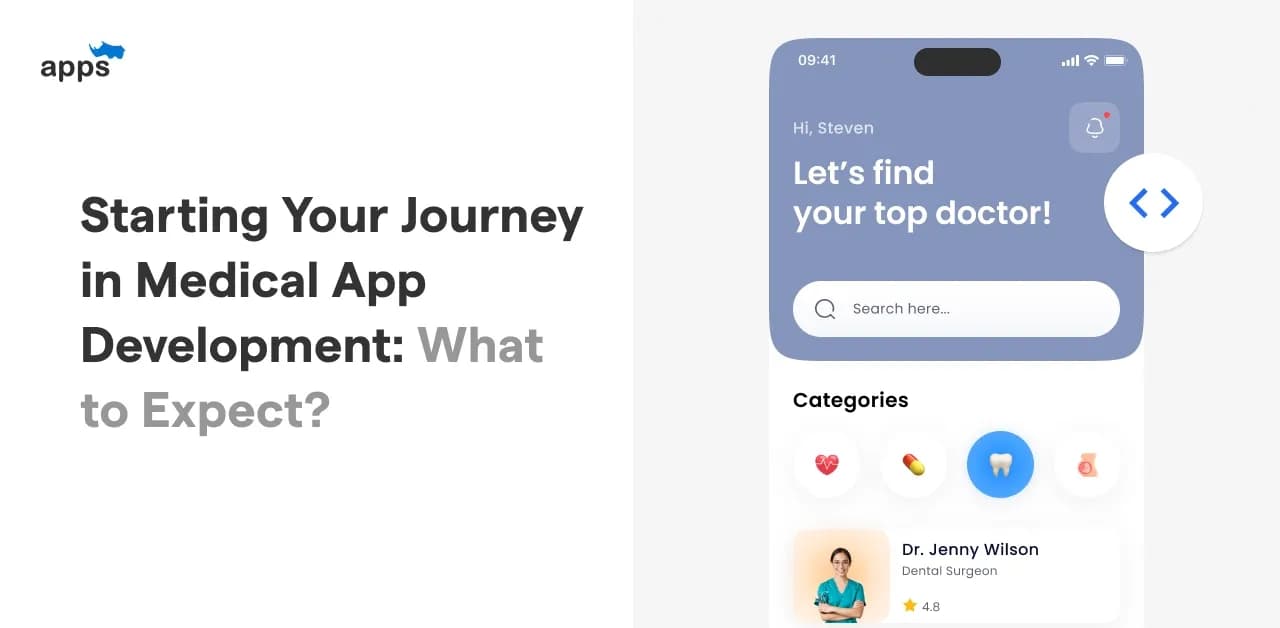
Want to extend your healthcare services to a virtual platform that offers comfort and convenience blended with personalized solutions? Try medical app development. This approach allows healthcare organizations to take their services to a new online medium. It is because of this medium that patients are no longer required to take frequent visits to their nearest healthcare organization anymore.
By making healthcare services available right at their fingertips, hospital organizations are more likely to attract and retain patients and even reach out to a wider audience, all thanks to medical app development.
Medical app development has also managed to disintegrate the barriers of distance that used to restrict patients from receiving exclusive healthcare services.
Besides patients, even healthcare professionals get to experience a lot of benefits by switching to medical app development. The entire workflow is streamlined, providing a much-needed change within the healthcare organizations.
Step into the world of medical app development and take a look at the ways through which it has been successful in winning the hearts and minds of both patients and healthcare providers.
This guide will showcase every intricate measure healthcare organizations must undertake for a smooth and properly functioning medical application.

The first and foremost step requires healthcare organizations to assess and understand their audience properly. The audience of a medical application comprises patients and healthcare professionals. To satisfy and boost user experience of both the parties their choices and preferences must be taken into consideration before beginning the development process.
In the case of patients, the application must be designed in such a way that it caters to their individual needs and preferences. Since health care regimens differ from patient to patient, the application must be equipped with adequate technologies that offer personalized solutions in accordance with their medical aid.
As for healthcare providers, the application must be able to cater to their pain points and offer an application that streamlines their workflow and helps them in delivering effective and efficient healthcare services at ease. The application must be thorough with tools and technologies required for delivering top-notch health care services.
It must also be integrated with secured and safe data privacy measures and regulatory standards to protect sensitive information from unauthorized access.
Making a note of their aspired thoughts, healthcare organizations can make a better decision on determining what features and functionalities will work best for their healthcare application.

When generating ideas for medical app development, it is essential to explore different possibilities and consider the gaps in current healthcare solutions. This approach ensures that the app addresses specific needs and provides innovative solutions to improve healthcare delivery.
One way to generate ideas is to identify areas where there may be inefficiencies or challenges in the current healthcare system. For example, there might be a lack of effective tools for medication management or a need for better communication between healthcare providers and patients. Identifying these gaps can guide the development of apps that focus on solving these specific problems.
Additionally, considering emerging trends and technologies can spark innovative ideas for medical apps. For example, the integration of wearable devices and Internet of Things (IoT) technology can enable remote patient monitoring, allowing healthcare professionals to track vital signs and provide timely interventions.
Artificial intelligence and machine learning can also play a role in medical apps by providing diagnostic support or personalized treatment recommendations.
Another approach to generating ideas is to involve healthcare professionals, patients, and other stakeholders in the brainstorming process. Their insights and experiences can offer valuable perspectives on the challenges they face and the improvements they would like to see. Understanding the end-users needs is crucial to developing an app that truly meets their requirements.
Innovation can also come from adapting successful solutions from other industries to healthcare. For example, popular features from e-commerce apps, such as personalized recommendations or user reviews, can be incorporated into medical apps to enhance user engagement and decision-making.
Suggested Reading:

This assessment can be done in three ways: through market research, surveys, and through interviews.
Before beginning the development process of your medical application it is important to understand the needs and preferences of the users. An idea of their needs and preferences will help businesses in determining what features and functionalities will work best for their medical application.
Additionally, through other subsidiary research and surveys, a generic idea of the already existing medical applications will be achieved. It is better to analyze the current trends of the market, the loopholes in the already existing applications, the behavioral patterns of the users, what pain points are yet to be eliminated, and how your medical application can work to achieve that.
With this knowledge, healthcare professionals can get going with their medical application development process with ease. By analyzing the needs and preferences of the target audience, developers can design and develop medical apps that address their requirements effectively.
Once the research phase is officially over, the planning phase begins. This phase marks the identification of the goals and objectives of your healthcare application. For this, healthcare organizations can consider questions like:
By considering these questions about healthcare the process of planning becomes much easier. The planning phase is very important as it consists of a rough draft of your entire medical application. If the development team is facing any issue during the development process they can always look back at this draft and get going.
The development process of a medical app typically follows several key steps to ensure a well-structured and successful outcome. Below is an overview of the step-by-step process:
Certain technical equipment or professionals must be required for every feature that has been finalized for your medical application. Therefore, before the development process begins, every important ingredient or tool needs to be in place.
Gathering the requirements beforehand ensures that the development process goes smoothly. The developers can stay in touch with healthcare providers in case they require any additional equipment throughout the process.
A medical application must have an intuitive and innovative user interface. As its target audience ranges from young children to adults, the application must be designed in such a way that audiences across all age groups must be able to use the application at ease.
This means that the application must have large icons and an interface that fits in various screen sizes. It must also have voice recognition and manuals that help and guide the users through the application and help them avail exclusive healthcare services.
This phase involves coding the app and implementing its functionalities. Collaboration between healthcare professionals and software developers continues to ensure the proper integration of medical knowledge and technical expertise. Regular communication and feedback cycles are crucial to address any issues or changes needed throughout the development process.
The developed application is subjected to a series of quality assurance checks and testing. This is majorly done to eliminate any bugs and issues in the application. The developed application must be free of errors and should be able to enhance user experience and boost customer satisfaction at all times.
Once the app is thoroughly tested and approved, it is deployed to the intended platforms such as app stores or enterprise environments. Collaboration between healthcare professionals and software developers helps in ensuring a smooth deployment process and addressing any technical challenges.
After the app is launched, ongoing maintenance and updates are necessary to fix bugs, improve performance, and add new features. Collaboration between healthcare professionals and software developers facilitates continuous improvement of the app, as they can collect user feedback, analyze performance data, and make informed updates for better user experience and medical relevance.

When developing a medical app, it is crucial to ensure compliance with regulatory requirements and standards to protect patient privacy, maintain data integrity, and promote the safe and effective use of the app.
One of the primary regulatory bodies governing medical app development is the Food and Drug Administration (FDA) in the United States. The FDA classifies medical apps into different categories based on their risk level, and each category has specific regulatory requirements.
Understanding the classification of the app and the FDA's guidelines is essential to ensure compliance during development. Other regions, such as the European Union, may have their own regulatory frameworks, such as the Medical Device Regulation (MDR), which also need to be considered.
In addition to regulatory requirements, developers should also adhere to relevant medical data protection standards. For example, in the United States, the Health Insurance Portability and Accountability Act (HIPAA) sets guidelines for protecting patients' electronic health information.
Understanding and implementing these standards helps safeguard sensitive healthcare data and maintain patient confidentiality.
Implementing robust security measures is crucial to protect healthcare data and prevent unauthorized access. This involves adopting industry-standard practices such as data encryption, user authentication, and secure transmission protocols.
Collaborating with cybersecurity experts during the development process can help identify and address potential vulnerabilities and ensure that the app is resistant to security threats.
Conducting regular security assessments and audits of the app helps identify and address any vulnerabilities or issues that may arise over time. This ensures that the app remains secure and compliant with evolving regulations and industry best practices.
Developing a medical app requires careful consideration of various factors, including market research, collaboration between healthcare professionals and software developers, compliance with regulatory requirements, and implementation of robust security measures.
By conducting thorough market research, developers can ensure that the app meets the needs of the target market and is differentiated from existing solutions.
Collaboration between healthcare professionals and software developers throughout the development process ensures that the app aligns with medical knowledge, clinical workflows, and user preferences.
Adhering to regulatory requirements and implementing robust security measures safeguards patient privacy, protects sensitive healthcare data, and promotes the safe use of the app. By following these steps, developers can create medical apps that not only improve healthcare outcomes but also contribute to patient satisfaction and trust in digital healthcare solutions.
AppsRhino offers the best Tech-driven solutions for Home services, Laundry delivery, Alcohol delivery, Grocery Delivery, Food Delivery, and Taxi Services:
Custom Development
7 Apr 2026
Tell us what your business actually runs on today, and we will map what it takes to make it one system.