
Custom Development
Alcohol Delivery Market Share and Trends: Size, Growth, & Business Opportunities
7 Apr 2026
Most people don’t think twice before booking a ride anymore. They open an app, tap once, and a driver shows up within minutes. That level of convenience has quietly reshaped user expectations across cities worldwide.
It’s exactly why more businesses are now exploring how to make an app like Uber and entering the space with their own platforms. But when you actually try to build an app like Uber, you quickly realize it’s not just about building an app, it’s about creating a real-time, scalable ecosystem.
In this guide, you’ll learn everything from must-have features and tech stack to development stages, cost, and business models. You’ll learn exactly how to create a successful Uber-like app solution from scratch.
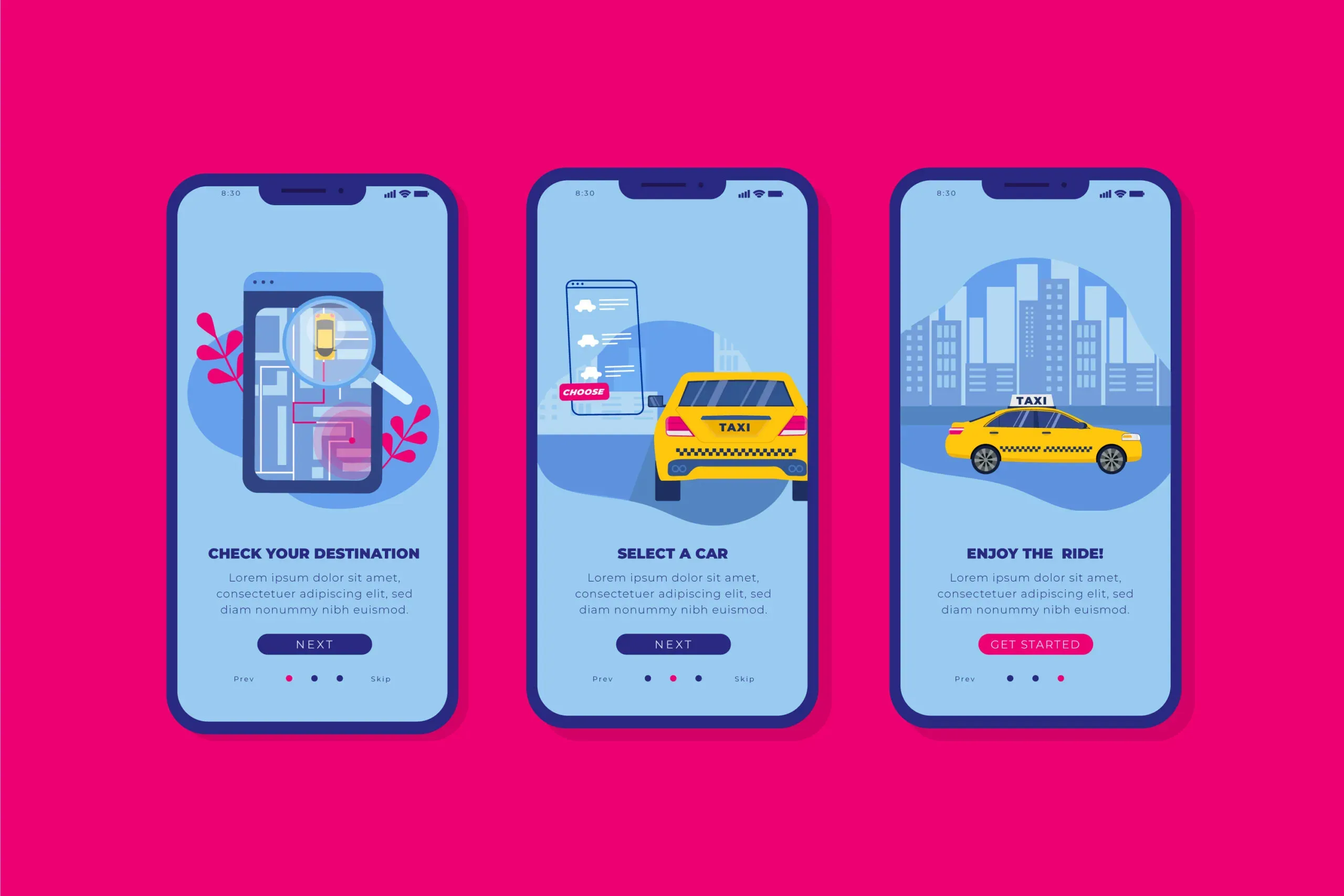
At its core, Uber is not just an app; it’s a marketplace that connects demand with supply in real time.
To successfully build an app like Uber, understanding how this system works is critical. Let’s take a look at the key components and revenue models behind it.
| Component | How It Works | Impact |
| Marketplace Model | Connects riders and drivers through a central platform | Enables the foundation of any Uber clone app or taxi app clone |
| Real-Time Matching | Matches riders with the nearest available drivers instantly | Reduces wait time and improves user experience |
| Dynamic Pricing (Surge) | Adjusts ride prices based on demand and supply | Maximizes revenue and balances availability |
| Commission Model | Takes a percentage from every completed ride | Drives consistent platform revenue |
| Cancellation Fees | Applies charges for last-minute ride cancellations | Prevents misuse and protects driver earnings |
| Subscription Plans | Offers ride passes or driver incentive programs | Creates additional recurring revenue streams |
| Multi-App Ecosystem | Uses separate apps for riders, drivers, and admin | Supports scalable Uber-like taxi app development |
This model powers every successful application, like Uber. If you’re planning to make an Uber-like app or explore Uber clone app development, replicating this structure is the foundation.

Once the model is clear, the next step is defining what your app actually does for users.
Here’s what makes or breaks the experience. Let’s break it down.
Before we dive deeper, here’s what riders expect when they open your app.
| Feature | Description |
| Ride Booking | Allows users to enter pickup and drop locations, select ride types, and confirm bookings in just a few taps |
| Real-Time Tracking | Displays the driver's live location and estimated arrival time |
| Fare Estimation | Shows an approximate cost before confirming the ride based on distance, demand, and route |
| Multiple Payment Options | Supports various payment methods, including cards, wallets, and cash, ensuring flexibility and convenience |
| Ride History | Keeps a record of past rides, invoices, and trip details, making it easy for users to track expenses |
| Ratings and Reviews | Allows users to rate drivers and share feedback after each ride, helping maintain service quality across the platform |
Now, let’s look at what makes the driver side of the platform efficient and reliable.
| Feature | Description |
| Ride Requests | Sends real-time notifications to drivers for nearby ride requests |
| Navigation Integration | Provides built-in navigation with optimized routes for pickups and drop-offs |
| Earnings Dashboard | Displays detailed insights into daily, weekly, and total earnings |
| Availability Toggle | Let's drivers switch between online and offline modes, giving them full control over their rides |
| Trip Management | Helps drivers manage current and completed trips, including route details and passenger information |
| Ratings System | Enables drivers to rate riders after each trip, promoting accountability and better behavior across both sides of the platform |
Behind both apps is a system that manages everything in real time.
| Feature | Description |
| User Management | Allows admins to manage rider and driver accounts, including onboarding, verification, and monitoring account activity. |
| Driver Onboarding | Handles document verification, approvals, and compliance checks to ensure only verified drivers are active on the platform. |
| Pricing Control | Enables dynamic fare adjustments, surge pricing configurations, and promotional offers to optimize revenue. |
| Analytics Dashboard | Provides real-time insights into rides, revenue, user activity, and performance metrics for better decision-making. |
| Dispute Management | Helps resolve ride-related issues, complaints, and refunds efficiently, improving overall platform trust. |
Getting these features right is what defines a strong Uber-like app solution. Whether you plan to develop an Uber-like app or scale further, these essentials set the foundation.
Once your features and model are clear, the next step is turning that idea into a working product. What you’re building here isn’t an exact replica of Uber, but a similar platform tailored to your business needs.
Here’s how the process typically unfolds.
Identify your target audience, service area, and pricing strategy. Choose from proven Uber clone business models based on your market demand.
List the must-have features for an Uber clone app and prioritize core functionalities. Start with an MVP to launch faster and validate your idea early.
Select frontend, backend, database, and real-time technologies. A strong Uber clone tech stack ensures scalability and performance.
Design seamless experiences for rider, driver, and admin apps. A smooth interface is essential when you create an app like Uber.
Build APIs, databases, authentication, and ride-matching logic. This forms the backbone of your Uber clone app development stages.
Develop rider and driver apps while integrating maps, payments, and notifications. These integrations help you efficiently develop an Uber-like app.
Test for bugs, usability issues, performance, and security gaps. A stable product is critical when planning how to build an app like Uber.
Launch your app, monitor performance, and roll out updates regularly. Partnering with an Uber clone app development company can simplify scaling.
Following these steps ensures your product isn't just built; it's built to last.
The right development partner walks you through every one of these stages, not just the easy ones. AppsRhino has guided founders through this exact process across dozens of successful Uber clone app development projects.
If you're ready to move from planning to building, the next step is simpler than you think.
Once the process is clear, the next step is picking the right tools to build it. You don’t need overly complex tech, just the right stack that supports real-time performance.
| Technology Layer | Why It’s Used | Common Tools & Technologies |
| Frontend (Mobile Apps) | Builds smooth, responsive interfaces for riders and drivers | Swift (iOS), Kotlin (Android), React Native |
| Backend (Server Logic) | Handles user requests, ride matching, and core logic | Node.js, Python, Ruby on Rails |
| Database | Stores user data, ride history, and transactions securely | MySQL, PostgreSQL, MongoDB |
| Real-Time Communication | Enables live tracking, ride updates, and instant notifications | Firebase, WebSockets, Socket.IO |
| Maps and Location Services | Powers navigation, route optimization, and location tracking | Google Maps API, Mapbox |
| Payment Integration | Processes secure in-app payments and transactions | Stripe, Razorpay, PayPal |
| Cloud Infrastructure | Supports scalability, storage, and app performance | AWS, Google Cloud, Microsoft Azure |
| Push Notifications | Sends alerts for ride updates, driver arrivals, and offers | Firebase Cloud Messaging, OneSignal |
The focus here is simple: choose tools that keep your app fast, reliable, and easy to scale as usage grows.

Before you start development, one of the biggest questions is cost. The answer depends on features, scale, and how you plan to build your product.
Here’s a clear breakdown.
| Development Type | Estimated Cost (2026) | Timeline | What You Get |
| MVP (Basic Version) | $15,000 – $40,000 | 2 – 4 months | Core features like booking, tracking, payments, and a basic admin panel |
| Mid-Level App | $40,000 – $90,000 | 4 – 7 months | Advanced features, better UI, analytics, and improved scalability |
| Full-Scale Uber Clone | $90,000 – $200,000+ | 7 – 12+ months | Complete ecosystem with rider, driver, admin apps, and automation |
| White-Label Solution | $10,000 – $30,000 | 2 – 6 weeks | Pre-built solution with customization and faster launch |
To understand where this budget actually goes, here’s a breakdown by major components.
| Component | Estimated Cost Range |
| Frontend Development | $10,000 – $40,000 |
| Backend Development | $15,000 – $60,000 |
| Real-Time & APIs | $5,000 – $20,000 |
| UI UX Design | $3,000 – $15,000 |
| Testing & QA | $5,000 – $15,000 |
Another key factor that impacts pricing is where your development team is located.
| Region | Average Hourly Rate |
| India | $20 – $50/hour |
| Eastern Europe | $40 – $100/hour |
| USA / UK | $100 – $200/hour |
The total uber clone app development cost varies based on how complex your product is and how quickly you want to launch.
As of 2026, building a production-grade Uber-like app typically costs between $90,000 and $200,000+, while mid-level apps cost between $40,000 and $90,000. MVP builds start at $15,000, and white-label solutions can go as low as $10,000, depending on customization and launch speed.
Once your app is live, the next step is generating consistent revenue. Here are the most effective Uber clone business models used today.
Most platforms combine commission and surge pricing as their primary revenue drivers, with additional models layered for scalability.
Building a ride-hailing platform comes with real operational and technical hurdles. If you’re thinking to develop uber like app, understanding these challenges early helps avoid costly mistakes.
Managing live location updates, route optimization, and low-latency communication can be difficult in any Uber clone app development setup.
Solution: Use reliable real-time systems like Firebase and optimized map APIs to ensure accurate tracking and fast updates.
Attracting enough drivers to maintain supply-demand balance is one of the biggest hurdles in any custom Uber clone app.
Solution: Offer incentives, flexible earnings, and onboarding benefits to build a strong and active driver network.
As user demand grows, handling high traffic, ride requests, and data without crashes becomes increasingly challenging in an Uber app clone.
Solution: Build on a scalable cloud infrastructure and optimize backend architecture to handle peak loads smoothly.
Different regions have strict policies around ride-hailing, making Uber clone legal considerations complex to navigate.
Solution: Research local regulations, ensure driver verification, and comply with licensing and insurance requirements.
Matching rider demand with driver availability in real time is critical for a smooth uber like taxi app development experience.
Solution: Implement smart algorithms and dynamic pricing to maintain equilibrium across the platform.
Managing the budget while building features can impact the overall Uber clone app development cost.
Solution: Start with an MVP, prioritize essential features, and scale gradually as user demand grows.
Addressing these challenges early makes the journey of building a like uber app much smoother and more predictable.
Before you move ahead with development, it’s important to understand the legal implications.
These are not just formalities; they directly impact how your platform operates in different regions.
You’ll need to register your company and obtain ride-hailing permits based on your location. Each country or city has its own approval process, so local research is essential.
Drivers must meet eligibility criteria, including valid licenses and verified documents. Background checks are often required to ensure rider safety and platform credibility.
Commercial vehicle insurance is usually mandatory for drivers on the platform. This protects all parties involved in case of accidents or disputes.
Your app must securely handle personal and payment data in accordance with regional laws. Following standards like GDPR or local equivalents helps avoid legal risks.
Digital transactions must comply with local financial regulations and tax systems. Proper billing, GST or VAT handling, and reporting are necessary from day one.
Some regions regulate fare limits, surge pricing, and driver commissions. Aligning with these rules ensures smooth operations as you scale.
Taking care of these early keeps your platform compliant and avoids unexpected roadblocks later.
*What you’re building here isn’t an exact replica of Uber, but a platform inspired by its model, tailored to your own business needs.*
At some point, every founder reaches this crossroads. Do you build everything from scratch or launch faster with a ready foundation?
There’s no single right answer; it depends on your goals, timeline, and budget.
Having a partner that supports both approaches makes the decision easier. With expertise in both custom builds and white-label platforms, solutions like AppsRhino help you launch faster while still giving you the flexibility to scale and evolve as your business grows.
Building a uber clone app doesn't have to take a year; the founders who launch fast make smarter scoping decisions, not cheaper ones.
Here's how to build an Uber-like app as an MVP without sacrificing the features that actually matter to your first users.
Skip this step, and you're building blind. Talk to real drivers and riders in your target market; their frustrations will shape your product better than any competitor analysis.
Resist the urge to build everything at once. Ride booking, real-time GPS, and payment processing are your non-negotiables; everything else waits for Version 2.
React Native or Flutter lets you build an Uber-like app for iOS and Android at the same time, cutting your development timeline by 30–40% without splitting your budget.
Google Maps, Stripe, and Twilio exist for a reason; don't reinvent them. Plugging in proven APIs for maps, payments, and SMS saves weeks of development and months of debugging.
Your backend is the engine nobody sees, but everybody feels. Node.js, paired with AWS or Firebase, handles real-time data smoothly and won't buckle when your user base grows.
A complete uber clone app runs on three interfaces, such as rider app, the driver app, and the admin panel. The admin panel, especially, is what keeps your day-to-day operations from falling apart.
Your first users shouldn't need a tutorial to book a ride. Model your UX closely on what people already know; familiarity builds trust faster than clever design.
Pick one city, launch hard, and fix everything that breaks before you expand. Trying to go wide too soon is one of the most common reasons MVPs stall.
Maintenance, server costs, and your first update cycle aren't afterthoughts; they're part of the build. Lock in that budget before you go live, not after the first bug report lands.
Getting your MVP live is just the starting line. The real work, like refining, scaling, and growing your Uber-like app solution, begins the moment your first rider books their first ride.
There's no shortage of development companies promising to build an app like Uber; fast, affordable, and "just like you imagined." The reality is that most products built on that promise don't survive their first six months in the market. What separates a well-built uber clone app from one that stalls isn't the idea; it's the team behind it.
AppsRhino has spent years doing exactly this kind of work. Not as a template shop, not as a code factory, but as a product-focused development partner that understands what ride-hailing businesses actually need to grow.
If you've read this far, you already know what you want to build. The only thing left is finding the right team to build it with you, and that decision is worth getting right the first time.
The ride-hailing space is evolving fast, and staying ahead means building with the future in mind.
As businesses invest more in custom app development, the focus is shifting from just functionality to intelligence and scalability.
AI-driven pricing and demand prediction are becoming more common, helping platforms optimize fares and availability in real time. Electric vehicle integration and sustainability-focused fleets are also shaping the next phase of ride-hailing apps.
We’re also seeing a move toward multi-service platforms, where a single app handles rides, deliveries, and more. Advanced analytics, automation, and smarter dispatch systems will continue to improve operational efficiency.
The future isn’t just about building an app like Uber; it’s about building a smarter, more adaptive platform that grows with user expectations.
Custom Development
7 Apr 2026
Tell us what your business actually runs on today, and we will map what it takes to make it one system.