

Custom Development
Alcohol Delivery Market Share and Trends: Size, Growth, & Business Opportunities
7 Apr 2026
Node.js is overhyped. That's a statement bound to cause a double-take, especially among developers and tech aficionados. It challenges the status quo, making one ponder the vast landscape of software development tools.
Yet, this very provocativeness draws us closer to understanding the undeniable value Node.js brings to the table.
Contrary to immediate assumptions that stem from bold claims, this runtime environment isn’t just another tool in the developer's arsenal—it's the pivot around which contemporary tech stacks can, and do, revolve with remarkable efficiency.
Envision a tech stack without Node.js as a city plagued by traffic jams—a place where data stutters and system capabilities are bottlenecked. Node.js developers, utilizing this technology, turn the scenario around, creating a streamlined, high-performance environment where applications run smoothly, akin to traffic flowing freely on an open highway.
This guide intends to peel back the layers of misunderstanding or underestimation surrounding Node.js, illustrating through simplicity and direct insight why it is absolutely critical in elevating your tech stack.
In a world where adaptability and performance intersect, Node.js stands as a beacon, guiding the way toward innovation and seamless functionality.
Let’s explore how Node.js developers are key to unlocking this potential, transforming the theoretical into the practical.

Node.js offers several advantages when it comes to performance and scalability in a tech stack.
Node.js is widely used especially in chat servers as its non-blocking I/O model allows handling multiple connections or as the tech-savvy people say ‘concurrent connections’ with any blocking or stopping of other tasks.
This results in improved performance, as it can efficiently handle high traffic and concurrent connections.
V8 JavaScript which is known for being lightweight helps Node.js become the high-performance framework to execute the codes at a rapid speed.
This lightweight and event-driven architecture allows for scaling and faster startup time.
Node.js has built-in support for horizontal scaling, allowing applications to handle increased load by adding more servers or instances.
Its non-blocking nature and efficient resource utilization make it well-suited for scaling applications to meet growing demands.
Node.js excels in real-time applications that require instant communication and data updates between the server and clients.
It can handle a large number of concurrent connections, making it ideal for applications such as chat platforms, real-time collaboration tools, or streaming services.
From front-end to back-end, Node.js allows developers to use the same programming language (JavaScript) throughout the tech stack.
This promotes code reusability, reduces the need for context switching, and facilitates faster development cycles.
Additionally, sharing code between the client side and server side reduces duplication of effort and promotes consistency.
Node.js developers possess a unique skill set and experience that can bring significant value to optimizing and enhancing your tech stack.
Here's how their expertise can make a difference:
Node.js developers have a deep understanding of JavaScript, the language that powers Node.js.
This proficiency allows them to utilize JavaScript's features and best practices effectively, resulting in cleaner code, improved performance, and better overall development practices.
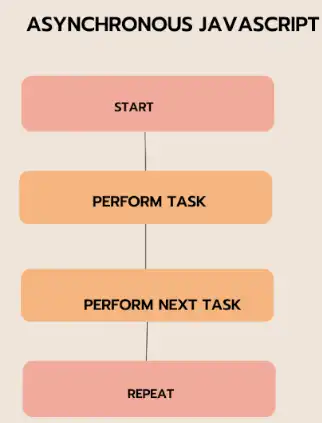
Asynchronous programming allows you to do multiple tasks using your system at one time and it is a core aspect of Node.js.
Node.js developers are well-versed in handling asynchronous tasks, utilizing callbacks, promises, or async/await patterns.
This expertise helps optimize the flow of your applications, and make them more responsive and efficient while avoiding blocking operations.
Event-driven architecture allows for handling a large volume of traffic at one time efficiently.
Node.js developers have experience in designing and implementing event-driven applications, enabling them to build scalable and high-performance systems.
Node.js developers are experienced in selecting and integrating appropriate modules into your tech stack.
This expertise helps streamline development, accelerates implementation, and allows you to leverage existing solutions to enhance your applications.

Node.js developers understand how to optimize code and make the most of Node.js' non-blocking I/O model and event loop.
They are proficient in identifying and resolving bottlenecks that could affect performance and scalability, ensuring your applications can handle increased traffic and requests efficiently.
If you are planning to introduce software that will be suitable for real-time chat, video, and audio streaming then Node.js is the perfect framework
Node.js is particularly well-suited for real-time applications and data-streaming scenarios.
Node.js developers have experience in building such applications that require instant communication and data updates.
Node.js developers often have expertise in front-end frameworks like React, Angular, or Vue.js.
This full-stack JavaScript knowledge allows them to seamlessly integrate the front-end and back-end components of your tech stack, resulting in a consistent and efficient development process.

Node.js has an event-driven and non-blocking I/O model, which makes it well-suited for building real-time applications like instant messaging apps etc allowing for efficient handling of simultaneous connections
Here are several reasons why Node.js is a popular choice for real-time applications:
Node.js's non-blocking I/O model allows it to handle a large number of simultaneous connections without being hindered by blocking operations.
This makes it ideal for real-time applications that require instant and bidirectional communication between clients and servers.
Node.js is built on the fast V8 JavaScript engine. Its lightweight and event-driven architecture contributes to fast startup times and efficient resource utilization, enabling high-performance and responsive real-time applications.
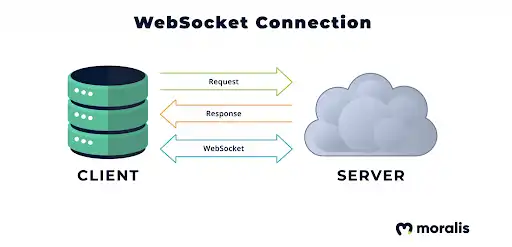
WebSockets enable full-duplex communication between clients and servers, allowing for real-time data streaming and instant updates.
Node.js provides built-in support for WebSockets, a key technology for real-time communication.
Node.js is widely used for building real-time collaboration and chat applications, where instant messaging, presence updates, and real-time notifications are crucial.
Examples include Slack, Discord, and Microsoft Teams, all of which are built using Node.js.
Node.js is a popular choice for building streaming applications, such as video and audio streaming platforms.
Its event-driven architecture and support for real-time communication make it well-suited for efficiently handling data streaming and providing a seamless user experience.
Real-time multiplayer games often require low-latency communication and instant updates.
Node.js's scalability, event-driven nature, and ability to handle numerous concurrent connections make it an excellent choice for building gaming servers.

Internet of Things (IoT) applications which consist of smart home appliances, smart devices, etc. often involve real-time data processing and communication between devices and servers.
And the non-blocking I/O model and lightweight nature are perfect for handling real-time data streaming and managing IoT networks efficiently.
Examples of popular real-time applications built with Node.js include:
Below are some examples that illustrate how Node.js has been successfully utilized in building real-time applications across various industries.

Node.js's non-blocking, event-driven architecture plays a crucial role in its scalability and performance capabilities.
Here's a detailed breakdown of how Node.js excels in handling these aspects effectively:
Suggested Reading:
Hire Skilled Node.js Developers: Optimize Your Backend
Some real-world examples of companies that have successfully incorporated Node.js into their tech stack and benefitted from the outcomes they have achieved. Here are a few examples:

Node.js is used at Netflix for their server-side rendering (SSR) implementation. With SSR, Netflix can generate dynamic HTML on the server and send it to the client, reducing the initial loading time.
LinkedIn is a networking site for working professionals. LinkedIn utilizes Node.js to power its mobile backend services. They adopted Node.js due to its lightweight and high-performance capabilities.

Uber adopted Node.js as part of their tech stack for their engineering platform called “Uber Engineering Console.”
Walmart incorporated Node.js into its tech stack to modernize its e-commerce platform and enable rapid iterations and deployments.
So, after this detailed discussion, we can conclude that Node.js is indeed a powerful technology, ideal for building scalable and high-performance applications.
From being a fast and efficient platform to providing scalability and simultaneous connections with any interruption Node.js is a perfect option if you are planning to build an application that might encounter higher traffic and simultaneous requests at the same time.
For any type of modern-day application, it is very important to be highly efficient and can handle rapid iterations, frequent deployments, and real-time data exchange sets it apart from traditional web technologies. Choosing Node.js will provide you with all the benefits and give your application a promising future and competitive advantage.
Custom Development
7 Apr 2026
Tell us what your business actually runs on today, and we will map what it takes to make it one system.