

Custom Development
Alcohol Delivery Market Share and Trends: Size, Growth, & Business Opportunities
7 Apr 2026
Even in the COVID-19 times, the transportation of alcohol or liquor via alcohol delivery apps is considered one of the economic sectors with the highest crisis resistance.
But in 2021, the alcohol beverage industry, like all the others, saw the effects of the pandemic.
Stocking up on alcohol and mixing cocktails at home were popular preferences as shops and customers worked to accept the new normal.
For the purchase of alcohol in 2022, the general expectation points to the adoption of e-commerce and on-demand delivery.
Alcohol delivery apps started to appear due to the Covid-19 regulations, which caused a decline in sales at pubs and liquor stores.
Before the pandemic, firms like Drizly had some momentum for the online sales and delivery of alcohol.
The diversity in restrictions across different cities and nations is a significant barrier to expanding online alcohol sales and delivery.
Different sets of laws govern the selling of alcohol in each location. Without these rules, the industry could not expand as significantly as it might have.
With time, there will be a beneficial change in how alcohol is delivered and sold online.

Let's look at some critical data on alcohol sales online, well-known brands, alcohol delivery, demographics, and more:
1. In 2022, the alcohol beverage market in the US will be worth $146 billion.
2. Throughout 2020–25, alcohol e-commerce is anticipated to expand by more than 66 percent, to reach $42 billion.
3. Due to several fresh consumer insights regarding online alcohol ordering, the United States is anticipated to lead significant growth in the industry.
4. The estimated share of e-commerce in off-trade alcohol sales is roughly 6%.
5. Sixteen significant markets—Brazil, Australia, China, Canada, Colombia, France, Germany, Italy, Japan, Mexico, the Netherlands, Nigeria, Spain, South Africa, the UK, and the US—are listed in the report.
6. Alcohol e-commerce value increased throughout the major markets by more than 12% in 2019 and more than 43% in 2020.
7. Due to its average yearly growth rate of more than 20%, the United States is predicted to have the most significant increase in the value of e-commerce.
E-commerce has evolved into a sophisticated and nuanced channel over time. The path of the client now includes digital involvement on a fundamental level.
A long-term structural change is taking place in the off-trade market due to the steadily growing power of on-premise and e-commerce.
The major market trends influencing the alcohol delivery apps and liquor delivery sector in 2022 are listed below.
IWSR intends to see a comeback consistent with prior growth levels recorded from 2014–19, despite the fact that the international spirits market declined in 2020 at a faster rate than the whole world spirits market.
According to general predictions, future growth will result in rising wealth levels and new competitors entering the US and Asian markets.
According to the IWSR consumer research, in the first half of 2021, nearly 39% of wealthy urban Chinese alcohol consumers reported spending more than RMB 500 (about 79 USD) on a single bottle of alcohol to enjoy at home.
The diversification of segments and the emergence of alcohol categories with niche status have been significant disrupters to the status quo of the international spirits landscape with the admission of new customers.
In 2020, an increase was seen in several categories, including agave-based spirits, Irish whiskey, Japanese whiskey, and US whiskey.
Products with minimal or no alcohol content are growing more popular with customers over time as societal norms make such a lifestyle more acceptable. Positive growth is experienced by channels primarily focused on selling adult beverages without alcohol.
E-commerce platforms, retailers, and liquor stores are all part of the increase. In the major markets, most non- or low-alcohol beverages are referred to as "Substitutes."
These goods are primarily intended for people who occasionally utilize a milder form of alcoholic beverages.
According to consumer research conducted by IWSR, 40% of UK residents who consume no or little alcohol are "Substitutors." These people are typically from Generation Z or the Millennial generation.
Millennials (41%) and Gen Z (46%) are both more inclined to choose alternatives than Boomers (36%), who make up a large part of the population.
With the advent of new technology, there is an excellent scope for alcohol delivery apps to capitalize on non-alcohol events with non-alcohol goods to provide mood-improving or practical advantages.
The majority of these items contain adaptogens, nootropics, and CBD. These goods are designed to improve customers' " feel" while maintaining their health.

The e-commerce landscape has become more complex, and in 2020, the value of e-commerce Increased by roughly +43% across 16 major regions. The growth in alcohol sales has led to an increase in merchants. Additionally, they employ a wider variety of business models.
Customers no longer care about the distinctions between various e-commerce platforms or offline and online alcohol purchasing methods. The thinning of the lines between various internet channels for selling alcohol is the direct outcome of this.
One illustration is the creation of logistics alliances between omnichannel retailers and on-demand providers. It provides alcohol delivery apps with a scope for a quicker delivery option.
People are now spending more time indoors, at home, and in locally owned establishments than outside. The IWSR data suggest that switching from on-trade to home-premise premium consumption is possible.
The two years spent at home will change the typical experiences when consumers return to the on-trade.
Making cocktails at home and subscription services are two more expensive at-home activities.
Customers will be more aware of the higher pricing and more readily turned off by the defective goods in bars, taverns, and restaurants.
Over time there is more scope for alcohol delivery apps to introduce premium and above products through new RTDs than through volume consumers. It points to a premiumization hinge.
Furthermore, there appears to have been a shift away from RTD innovation as the bulk of international RTD categories is currently represented by regular and lower-priced brands.
The premiumization trend will undoubtedly be appealing to owners of wine and spirits brands. Although flavor is the primary factor influencing customer choice for RTD in sizable markets, liquor bases are also strong motivators.
People are choosing new beverages or switching between old ones more significantly.
Craft beer, wine, Japanese whiskey, and hand seltzers are among the many product trials that people express a strong interest in, according to IWSR research.
Major beverage producers are looking into the as-yet-undiscovered areas of beverages to broaden their product offerings.
Diversification is a reaction to shifting consumer interests and preferences. In addition, the distinctions between alcohol and conventional soft drinks have blurred.
Most corporate and social responsibility agendas prioritize sustainable packaging options in the beverage sector, increasing the scope for alcohol delivery apps to capture more significant markets.
Following conferences like COP26, there have been some concerns about the effects of climate change.
Customers and key players in the sector are asking beverage companies to demonstrate a commitment to sustainable practices. Solidarity among local brands and enterprises is another significant tendency during a pandemic.
It is also directly related to consumers' attitudes toward sustainability.
For instance, according to research by IWSR, roughly 48% of US consumers of alcoholic beverages let the sustainability and environmental initiatives of a corporation affect their purchase decisions.
Several other factors influence the global beverage sector's production and route to market and consumer demand.
These include rising packaging prices, container capacity, supply chain-related challenges, inflationary pressures, and environmental changes.
Parts businesses may need to be more tactical and modify some of their short-term brand and market strategies to fit in with the operational and economic environment.
Suggested Reading:
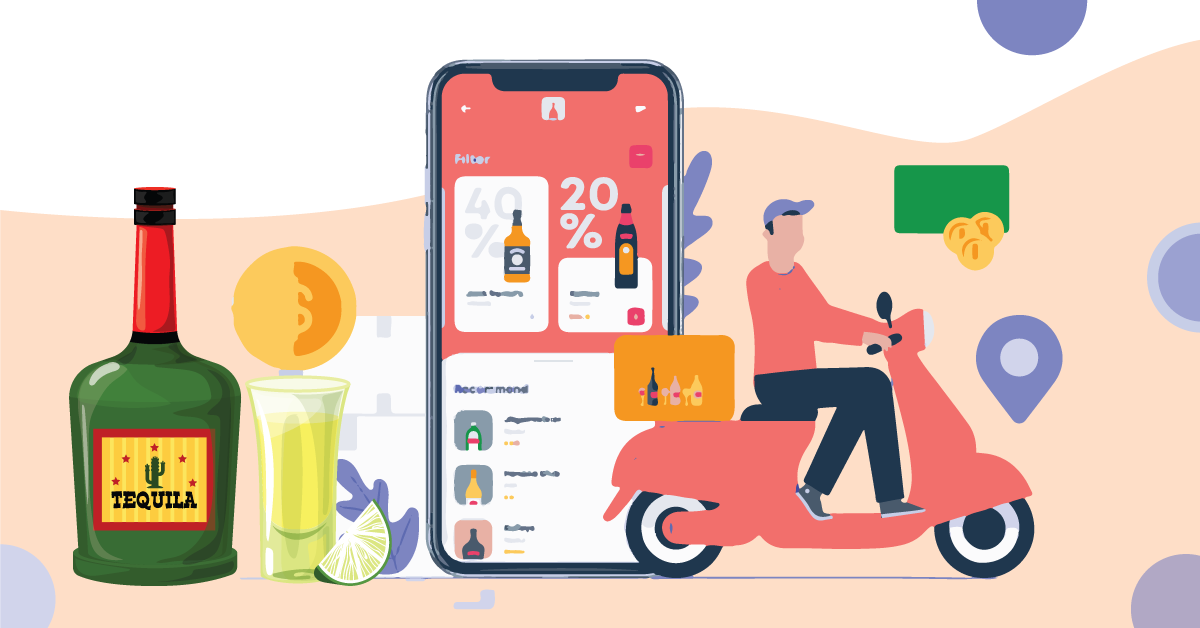
Shortcomings of the Alcohol Delivery Apps
According to the experts, alcohol e-commerce businesses will keep utilizing online channels to increase their market share while capitalizing on consumer online purchasing behaviors that have developed over the previous year.
Additionally, this sizable alcohol delivery app industry is anticipated to act as a draw for new competitors and innovation, particularly expanding the scope of alcohol delivery apps, given how quickly the internet market is growing and how businesses can take advantage of convenience.
The dynamics of alcohol consumption are radically altering with the times. Why are you still holding out?
AppsRhino offers the best Tech-driven solutions for Home services, Laundry delivery, Alcohol delivery, Grocery Delivery, On-demand Cannabis, and Food Delivery Solutions.
Contact AppsRhino to quickly create, optimize, and dispatch routes for your company.
Custom Development
7 Apr 2026
Tell us what your business actually runs on today, and we will map what it takes to make it one system.