


Custom Development
Alcohol Delivery Market Share and Trends: Size, Growth, & Business Opportunities
7 Apr 2026
From machine learning to deep learning, AI has become a reality, but not in the way we used to see it in movies (robots taking over the world!).. Yes, according to many tech world leaders, it is going to change the world. AI has opened the path for many futuristic technologies, and we won’t be surprised to know that cars are flying and humanoid robots are talking in the future!
In fact, we have taken the first step towards allowing machines & bots to have natural conversations with humans using generative AI.
Generative AI models such as ChatGPT, Google’s Gemini, DALL E, Midjourney, etc., allow machines to create meaningful human-like content or data, such as images, music, text, or even entire virtual environments.
The world relies on generative AI developers to implement these conversational programs into different applications. These devs can integrate intelligence into the simplistic system using your preferred generative AI model.
If you are a beginner and interested in learning how to enter the world of generative AI, then you are in the right place. In this guide, we will take you from fundamental concepts to real-world applications of AI and explain how generative AI developers can help your AI project.
As we said, we will start from the fundamentals, so here it is:
Understanding probability and statistics is essential in generative AI because generative models aim to learn and capture the underlying distribution of the data they are trained on. Probability theory allows us to model uncertainty and make predictions about possible outcomes.
Statistics provides the tools for analyzing and interpreting data, which is crucial in generating new content or data.
If we break it down, generative AI models are somewhat similar to toddlers. When a child’s brain is at the early developmental stage, we introduce them to new food, colors, and words every day and track their progress patiently so that they can learn and grow.
Similarly, we carefully feed AI models new data daily, monitor their responses, and train them to learn complex patterns and generate realistic outputs.
Various types of generative models are available. Exploring them allows AI developers to understand each approach's strengths, limitations, and unique characteristics. This helps in choosing the most suitable model for specific tasks and promotes innovation in generative AI development.
Training and evaluating generative AI models involves several steps and considerations to ensure the models learn effectively and generate high-quality outputs.
Although AI models can have inaccuracies, hallucinations, unresponsiveness, etc., AI developers know how to work around these challenges and can optimize the model to generate the best possible output.
In this first step, diverse and representative data are collected from relevant and targeted sources. Then, these data are sent for the preprocessing step, where vast amounts of data are cleaned, normalized, and augmented to enhance their quality and variety.
The preprocessing step helps AI developers capture the distribution more accurately to generate accurate content.
Once the collection and cleaning process is done, the normalized datasets are fed into the deep learning models, and the results are analyzed carefully. AI Developers use unsupervised learning models so that the AI can learn from the data independently without any intervention.
Deep generative models often require a lot of computational resources and time to converge to meaningful and high-quality results, making optimization techniques and efficient training strategies important.
Evaluation metrics are used to assess the quality and performance of generative AI models. Common evaluation metrics include perceptual similarity metrics (e.g., Fréchet Inception Distance, Structural Similarity Index), likelihood-based metrics, and human judgments.
These metrics help AI developers gauge how closely the generated outputs align with the desired distribution and assess their visual appeal and realism.
These evaluation metrics have certain limitations as they may only capture some aspects of quality for comprehensive analysis. By understanding these limitations, AI developers can refine their evaluation strategies to ensure a more comprehensive assessment of generative AI models.
Qualitative analysis, user studies, and feedback are used to assess the strengths and weaknesses of generative AI models. Based on the evaluation results and user feedback, iterative improvements to the models may be made to enhance the quality of the generated content.
Certain advanced concepts in generative AI demonstrate the continued progress and research in the field, allowing for more controlled and specific output generation.
Conditional generation gives users more control over the generated content and enables applications such as image synthesis, style transfer, and text-to-image generation. The content can be generated based on specific conditions or constraints.
For example, in image generation, a conditional generative model can be trained to generate images of cats given the input condition "cat."
Unsupervised representation learning is valuable in dimensionality reduction, clustering, and transfer learning tasks. It aims to learn meaningful and useful data representations without explicit labels or supervision.
Generative models can be trained to learn such representations by reconstructing input data or by training with objectives that encourage the discovery of underlying structures or factors of variation in the data.
Adversarial defenses aim to enhance the robustness and security of generative models against various attacks, such as manipulating generative models to produce unintended or malicious outputs.
These attacks can exploit vulnerabilities in the models or input data to generate content that deceives or misleads the model or its users.
Suggested Reading:
Expert Tips for Choosing the Right Generative AI Developers
Here's an explanation of the tools and frameworks commonly used by generative AI developers in the development process.
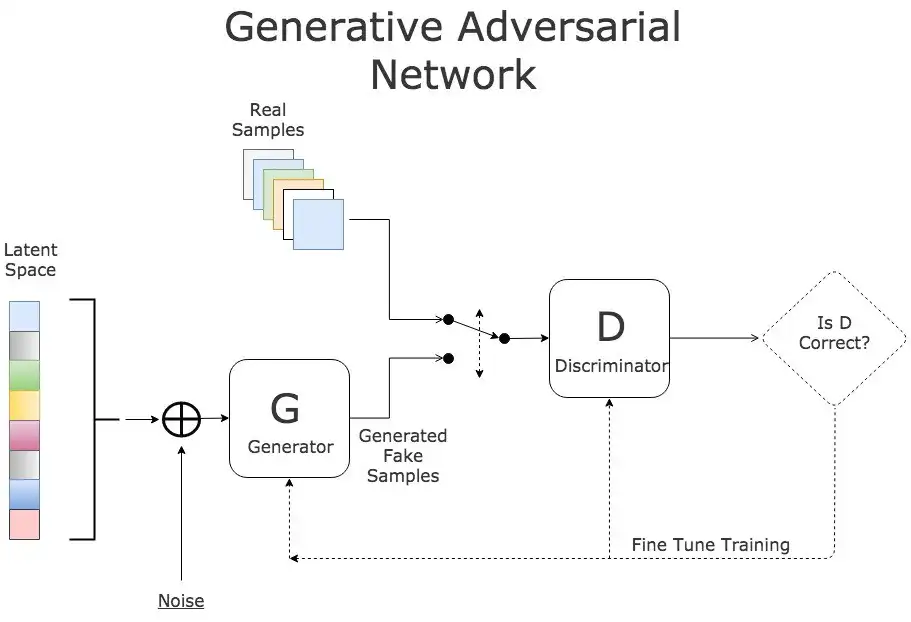
Several libraries are specifically designed to develop GANs and other generative models. These libraries help AI developers streamline the process of training, experimenting with, & deploying generative models such as GANs by providing optimized frameworks, pre-built components, and advanced functionalities tailored to the unique requirements of generative model development. Some popular ones include:
There are various resources available to learn generative AI development. Some popular ones include:
Overall, TensorFlow and PyTorch are popular frameworks for generative AI development, and specific libraries and APIs like StyleGAN, CycleGAN, and DALL-E provide specialized functionalities for different.
Let's dive into the applications, ethical considerations, and challenges, as well as the latest research and trends in generative AI, in more detail:
Certain challenges these AI models are facing lately are viable, too, as they pose a significant threat to the creativity, fairness, and ethical implications of human-generated content. So, AI developers and the broader community require careful consideration and proactive measures.
Generative AI is still in its infant stage, and so many research and trends are rising, such as:
The field of generative AI is continuously evolving, and these applications, ethical considerations, and research trends drive its future directions and potential impact in various domains.
The future is undeniably shaped by AI, presenting vast opportunities across numerous domains. Since its official launch in 2022, AI has showcased its transformative potential, with AI developers at the forefront of this evolution.
Yet, alongside its promise, AI carries inherent risks. AI developers are responsible for channeling AI's potential for positive impact while safeguarding against misuse. This necessitates ongoing refinement of content generation, bolstered controls, and adoption of privacy-preserving measures.
Furthermore, regulatory frameworks must adapt to ensure responsible AI development and deployment. By integrating safeguards and ethical considerations into AI development practices, developers can foster a future where innovation flourishes while upholding societal values.
In this journey, AI developers serve as stewards of progress, shaping AI's trajectory toward a future where benefits are maximized and risks are mitigated. Through their commitment to innovation and responsible practice, AI developers hold the key to realizing AI's full potential for the betterment of society.
Hire Dedicated Developers for various technologies such as Android, Angular, React, IOS, PHP, Node, Joget, MongoDB, and Java with AppsRhino:
Contact AppsRhino Today!
Custom Development
7 Apr 2026
Tell us what your business actually runs on today, and we will map what it takes to make it one system.