
Custom Development
Alcohol Delivery Market Share and Trends: Size, Growth, & Business Opportunities
7 Apr 2026
Most online stores look the same.
Scroll through a few, and you’ll forget which was which.
That’s because most businesses still use cookie-cutter templates and hope to stand out. But when everyone builds the same kind of storefront, no one gets noticed. Worse customers stop caring.
Real growth comes with a website that reflects your brand, speaks to your audience, and performs like a high-converting source.
This is where custom ecommerce website development makes all the difference.
In this guide, we’ll break down the 10 best tools to help you build a store that’s unique, scalable, and ready for 2026 and beyond.
Online store development isn't just about putting products on a webpage it’s about building something that reflects how your business operates. And no two businesses work the same.
A retail brand might need smart inventory syncing across multiple channels. A subscription-based service may need personalized checkout flows. That’s where custom ecommerce website development tools come in they give you the power to shape the buying experience from the ground up.
We’ve handpicked 10 tools used by real businesses to build sites that convert. From easy-to-use drag-and-drop builders to open frameworks built for scale, here’s what makes each tool stand out and where they may fall short.
If you’re looking for a developer-first platform to build highly tailored ecommerce apps, especially for delivery industries, AppsRhino is a custom ecommerce development company that checks all the boxes.
Built to support industries like grocery, alcohol, and food delivery, it blends frontend flexibility with powerful backend infrastructure.
✅ Pros:
❌ Cons:
AppsRhino is a go-to for b2b ecommerce website development where unique workflows and multi-platform integrations are needed.
You get control over payments, order fulfillment, and customer communication with secure APIs and automation tools.
Shopify Plus is ideal for businesses scaling fast and needing robust backend support without a heavy dev lift.
It’s an enterprise-grade version of Shopify with better checkout performance and flexible API access.
✅ Pros:
❌ Cons:
You also get integrations with over 6600 apps and omnichannel selling tools. It’s not the most open system, but for DTC brands, it delivers unmatched reliability and ease.
Magento (Adobe Commerce) is the veteran choice for teams with development power.
It’s an open-source platform ideal for mid-market and enterprise brands wanting complete control from the codebase up.
✅ Pros:
❌ Cons:
It’s best used when personalization, global commerce, and multiple storefronts are essential. Integrate AI-based tools or build from scratch Magento allows it.
Suggested Reading: How to Choose the Right Ecommerce App Development Services
BigCommerce offers a strong middle ground more flexibility than Shopify, but easier to manage than Magento. It’s also built for SEO performance and global sales.
✅ Pros:
❌ Cons:
With enterprise-level uptime and segment-based customer grouping, it’s also compatible with ai ecommerce website builder integrations and analytics extensions.
If your team already uses WordPress, WooCommerce is an easy leap into ecommerce. It’s lightweight, open-source, and highly extensible.
✅ Pros:
❌ Cons:
You’ll need some WordPress experience, but in return, you get full control of both content and commerce a rare combo for custom ecommerce website development.
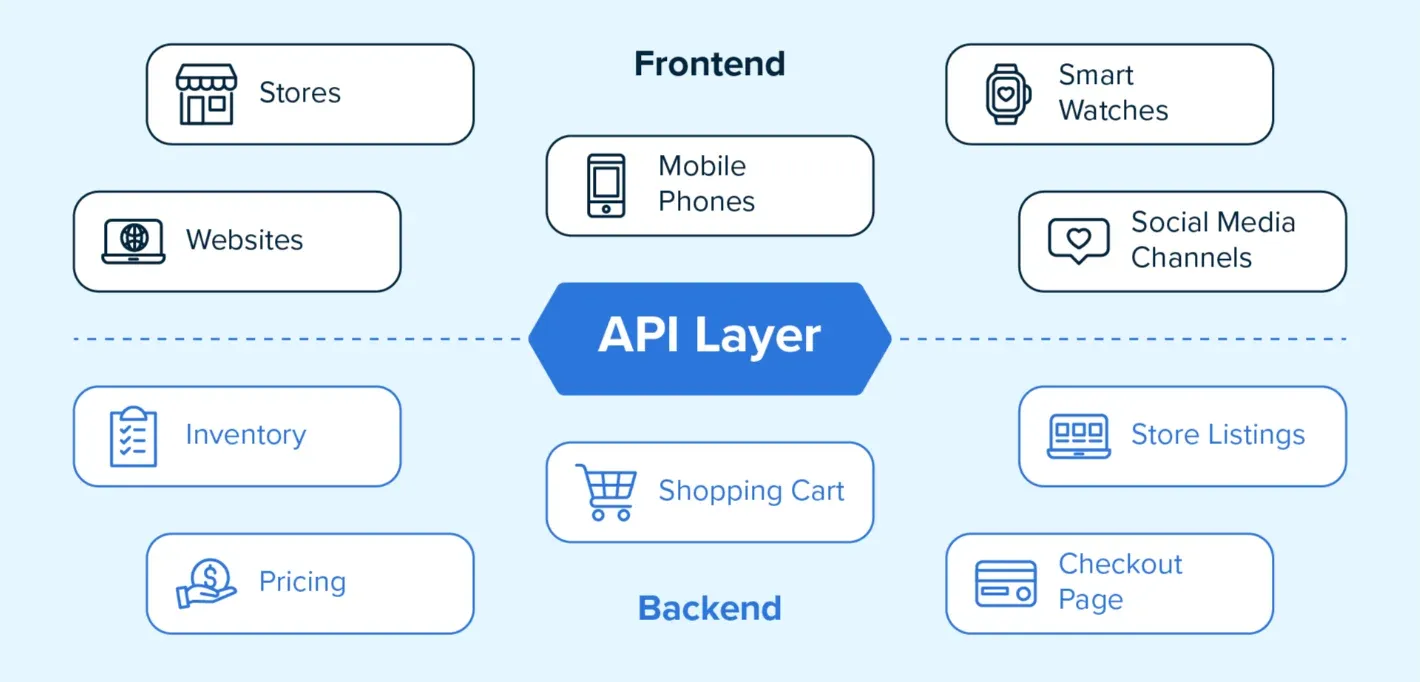
Headless commerce separates backend logic from the frontend interface. Brands that want full design control and future-proof flexibility are shifting to this approach.
✅ Pros:
❌ Cons:
You’ll pair a CMS (like Contentful) with tools like Commerce Layer or Commercetools. It’s perfect for advanced b2b ecommerce website development and complex user flows.
Big Cartel is made for creatives. If you’re selling prints, handmade goods, or digital art, this platform is simple, visual-first, and budget-friendly.
✅ Pros:
❌ Cons:
It’s also one of the few free AI e-commerce website builder options with clean interfaces and fast setup times.
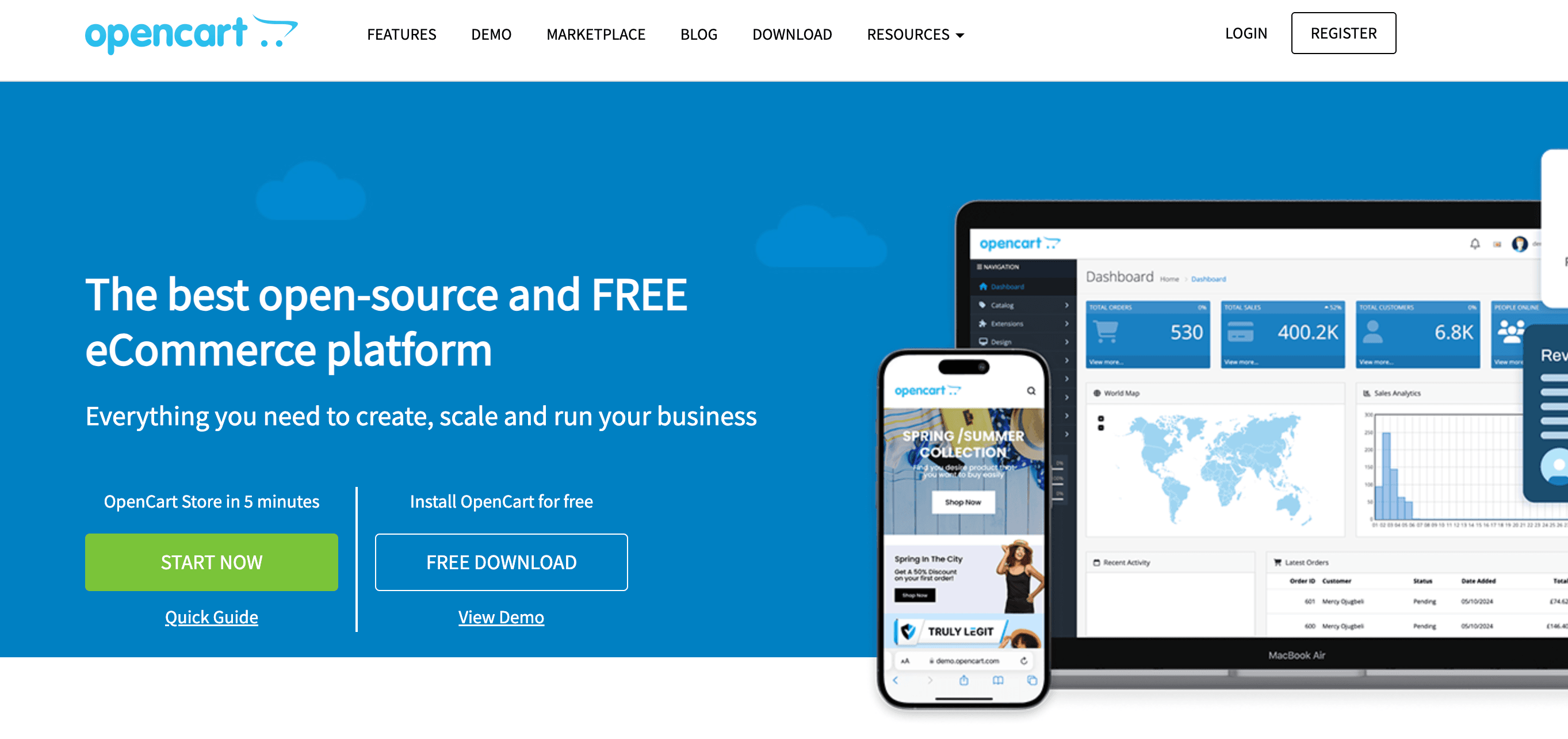
OpenCart is a classic open-source ecommerce platform backed by a large dev community. It supports third-party modules and custom themes out of the box.
✅ Pros:
❌ Cons:
For teams that need to build something entirely custom without paying licensing fees, OpenCart offers a good starting point.
PrestaShop offers a wide range of built-in ecommerce features, ideal for product-heavy businesses. It’s free to use, and the module marketplace lets you scale with add-ons.
✅ Pros:
❌ Cons:
It’s a favorite for localized ecommerce sites and growing b2b ecommerce website development in non-English markets.
Wix E-commerce is one of the fastest ways to launch a small online store. With drag-and-drop simplicity and over 500 templates, it's beginner-friendly and requires zero code.
✅ Pros:
❌ Cons:
Thanks to the built-in ai ecommerce website builder, Wix helps small businesses go live with optimized layouts and performance in a matter of hours.
Let’s be honest, getting a store online isn’t the hard part anymore. What really matters? The things folks don’t always see but feel speed, safety, and whether your site just… works when they need it to.
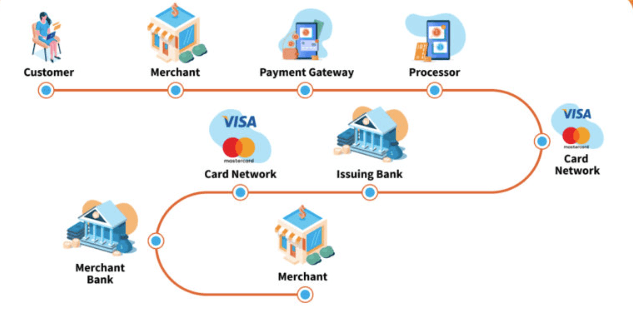
People trust their gut. If something feels off your checkout looks dated or a card form glitches they bounce. Fast.
That’s why custom ecommerce website development must cover security like a hawk. You’ll need SSL, clean gateways, and yeah, PCI rules. Boring? Maybe. But not having them costs you more.
Even if you're using a free AI e-commerce website builder, it’s worth checking what’s under the hood. Can it handle Stripe? Does it stop weird login attempts? You don’t want to find out the hard way. Especially for B2B ecommerce website development, where one bad experience can cost thousands.
After launch, things break. It’s just how the internet works. Plugins clash. Pages slow down. A customer sends a screenshot at midnight and something’s off.
If you're building custom, make sure someone (you or your dev) is around to fix stuff. Platforms offering real support (not just bots) matter. Especially when your AI ecommerce website builder promised “easy,” but you’re five tabs deep trying to fix a product filter.
If Google can’t find you, no one will. That’s the blunt truth.
So yeah, pick platforms that let you write clean meta titles. URLs that make sense. Let you add schema without digging through 15 menus. Ecommerce web development isn’t just about beauty it’s visibility too.
And if you're handling B2B ecommerce web development services, SEO’s not a luxury. It’s survival.
Before selecting your platform or AI ecommerce website builder, consider these real-world factors that directly impact your store’s performance.
You don’t want a site that crashes on Black Friday or limits product SKUs. If you’re eyeing b2b custom ecommerce development services, ensure your tool supports high traffic, bulk listings, and flexible backend expansion.
For example, BigCommerce handles up to 99.99% uptime and thousands of product SKUs without lag.
A free tool might save you now but cost you growth later. Outline both upfront and recurring costs.
Some tools like free AI e-commerce website builder options, look tempting, but paid alternatives often offer better SEO, speed, and integrations that scale with your business.
Got a dev team? Great go headless or open-source. No technical team? Look for drag-and-drop tools like Joget, Wix or Shopify.
Choosing a tool that matches your in-house skills helps avoid future delays and keeps your launch timeline realistic.
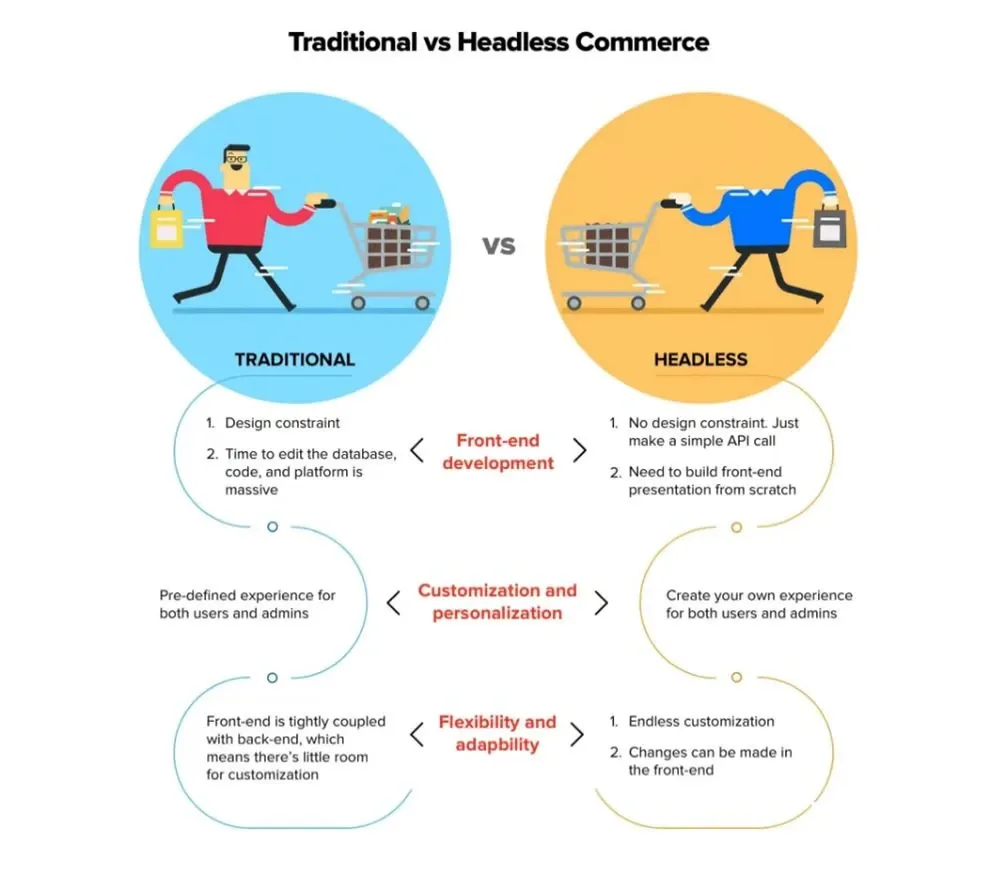
Before setting up your store, you’ll probably face this choice early: go with a standard e-commerce platform, or take the headless route. The decision isn’t about trends it’s about what fits your business now and what you’re building toward.
Platforms like Shopify or Wix are like furnished apartments. You move in, decorate a bit, and you’re good to go. No plumbing to fix, no walls to break.
Take a local coffee brand, for instance. They want to launch online in a week, accept payments, and ship bags across the country. With Shopify, they’re up and running in two days. It works.
But the downside shows up when they try to add features that the platform doesn’t offer or when they want to design something that isn’t in the template.
That’s when many outgrow the platform. They start to look elsewhere.
And if you're trying to scale into b2b ecommerce development solutions, those built-in limitations can slow you down.
Now, headless commerce is different. It’s more like building your own home from scratch.
Let’s say a fashion label wants every product page to feel like a campaign video, with personalization, layout changes. With a setup like Contentful and a frontend built from the ground up, they can do all that. They even plug in an AI ecommerce website builder to help generate variants faster.
But there’s no shortcut here. You need ecommerce website developers. You need time. And you’ll need to maintain everything you build.
Still, for those pursuing large-scale results in custom ecommerce web development, this is often the way forward.
The right development tool doesn’t just help you build a store, it shapes how your audience experiences your brand.
As businesses evolve, so do their needs. Whether you're launching a new D2C brand or expanding a wholesale venture, choosing between a quick ai ecommerce website builder and a scalable custom ecommerce website development solution can make all the difference.
While tools like free AI e-commerce website builders are helpful for MVPs, brands that seek long-term growth often outgrow their limitations.
For companies that want full control, flexibility, and performance, AppsRhino stands out. With deep customization, modern APIs, and B2B capabilities, it supports businesses that refuse to compromise on user experience or backend control.
From secure payments to Custom App Development, AppsRhino simplifies complexity without sacrificing speed.
No matter your industry or scale, your website should reflect your business goals today and in the future. Let this guide help you take the first step toward building a powerful online presence.
Custom Development
7 Apr 2026
Tell us what your business actually runs on today, and we will map what it takes to make it one system.